
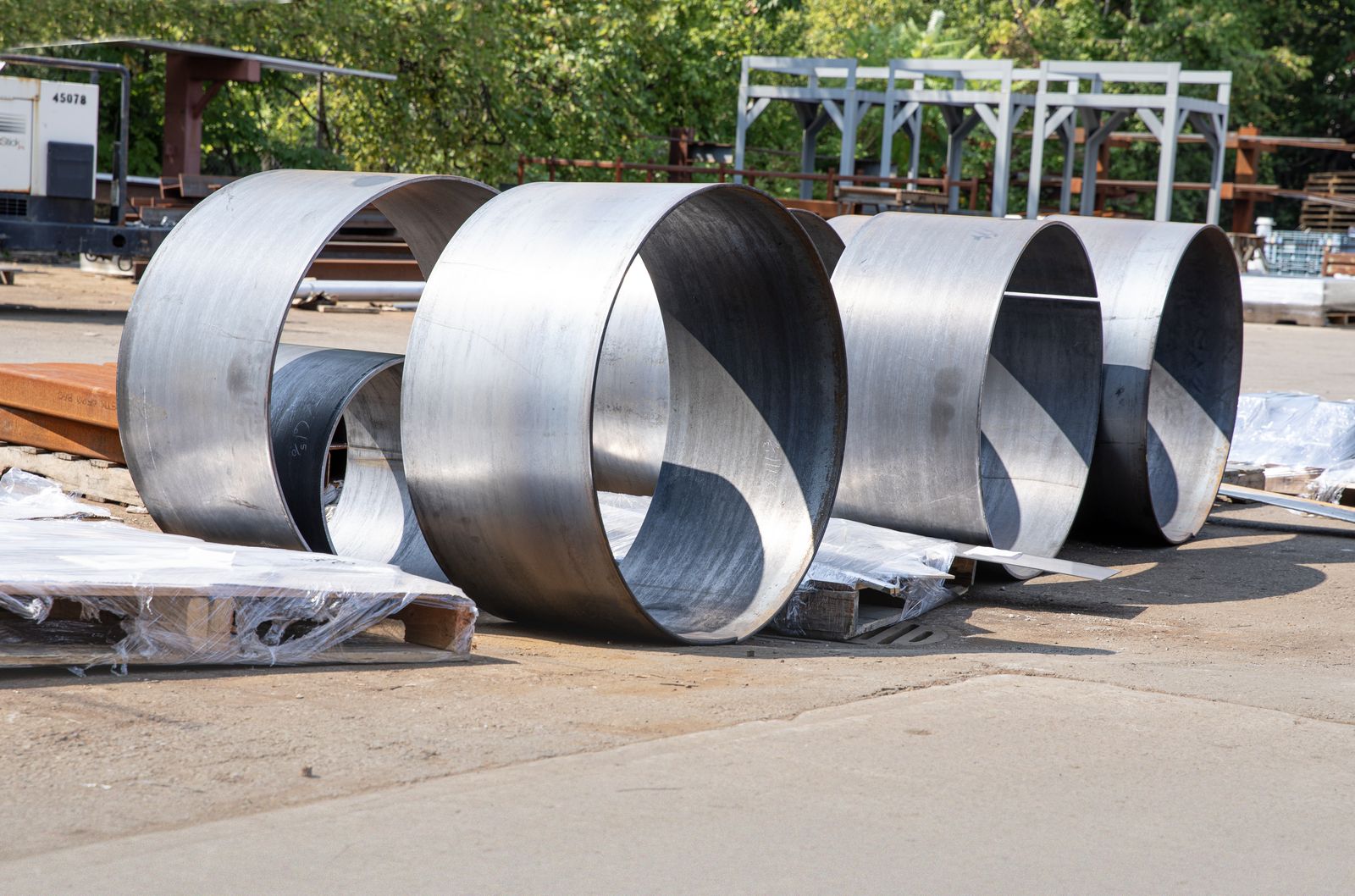
A surprising amount of what leaves this shop started life flat. Tank shells, duct sections, guards, rings for mining forms, liner segments, the odd chimney. Somebody needed a round part in steel or stainless, nobody stocks it in that size, and rolling flat plate into it is the fastest way to get one. Metal rolling is one of the older trades in the building, and September is when the calls pick up, because plants want their winter shutdown parts on the shelf before the shutdown.
What We Roll
Cylinders and shells. Plate rolled to a diameter, seam welded, and squared on the ends. The cylinders in the photo above are a typical set: rolled, tacked, welded out and sitting in the yard ready to ship. Tank bodies, hopper cones, chutes and duct sections all start this way.
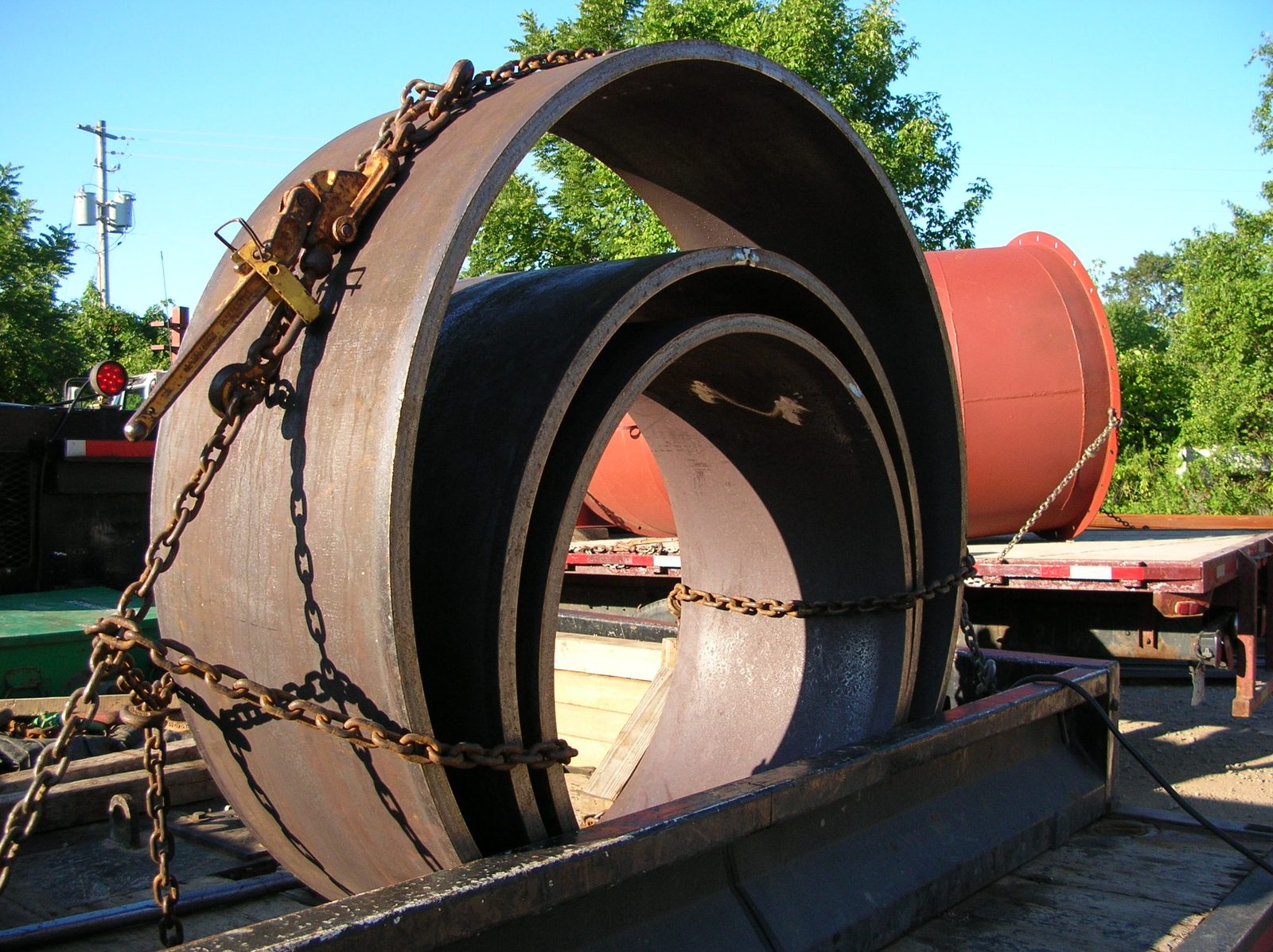
Rings. Heavy plate rolled into rings for concrete forms, machine bases and structural connections. The 12 ft diameter forms we built for the mining industry are rolled rings at the end of the day, just very large ones.
Cones and segments. Transitions, reducers and segmented elbows, laid out flat, cut, then rolled and fitted. Layout is where a cone goes right or wrong, and it is done here, not guessed at.
Channel, angle and customer material. Rolled and punched channel with connection plates, curved angle for rails and guards, and plenty of material that customers drop off with a drawing and pick up bent to it.
The Equipment Behind It
Two rollers do the work: a 5 ft double-pinch hydraulic roller for plate, and a 4 ft mechanical roller for sheet and lighter sections. Double-pinch matters because it pre-bends both ends of the plate, so you do not end up with the flat spots a single-pinch machine leaves at the seam. Ahead of the rollers sit shears that take 1/2 in plate at 10 ft, band saws and a cold saw, and above it all seven overhead cranes, which is what lets a shop handle a ring you cannot pick up by hand. The full list is on the custom fabrication page.
Why Rolling and Welding Belong Under One Roof
A rolled part is only half done when it comes off the roller. The seam has to be welded, and welding a seam pulls the cylinder out of round if it is done carelessly. Doing both here means the same people who rolled it fixture it, weld it in the right sequence and check it round before it goes anywhere. If it needs a flange, a machined face or a bolt pattern, it goes to the machining side. If it needs primer or paint, that happens in-house too, and galvanizing is arranged when the job calls for it. One shop, one quote, one truck.
Getting a Rolling Quote
Three numbers get you most of the way: material thickness, finished diameter and length. Add the material (mild steel, stainless or aluminum) and whether you are supplying it, and we can quote it. Send a sketch or a drawing through the contact form, or bring the plate itself to 3485 Mainway in Burlington. Shops and plants across Hamilton, Oakville, Milton and Mississauga send rolling work here for exactly this reason: it comes back welded, finished and round.